Spring
Ronja, the Robber's DaughterSpring is the novel’s decisive seasonal turning point: after winter’s scarcity and enforced separation, melting snow restores the forest, frees travel, and lets Ronia return to the woods and to Birk. Yet the season’s promise is temporary. Its exuberance opens onto summer’s precarious abundance and, eventually, the signs of autumn that the children would rather not face.
The End of Winter
Spring arrives as a joyful shout around Matt’s Fort. Snowmelt streams down the cliffs into the river, which roars and foams, its waterfalls seeming to sing without pause. The Wolf’s Neck, long covered in snow, becomes a rushing passage again; Matt and his robbers ride through it early one morning, singing and whistling as they set out to resume their life on the road. The same thaw that transforms the landscape restores movement to the people who depend on it.
That renewal follows a winter of real want. Birk explains that his family, newly settled at Matt’s Fort, has lost its goats and sheep and is down to its horses, which they wisely left with a farmer beyond Borka’s Forest. Their remaining flour, turnips, peas, and salted fish are running out. Even water has been difficult: they have melted snow when the stream beneath it could not be reached, and hauling a bucket up a rope ladder in a snowstorm has left Birk joking about smelling like a dirty robber. Against that hardship, spring’s flowing water and open routes register as changes in the conditions of life, not merely as pleasant scenery.
Return to the Woods
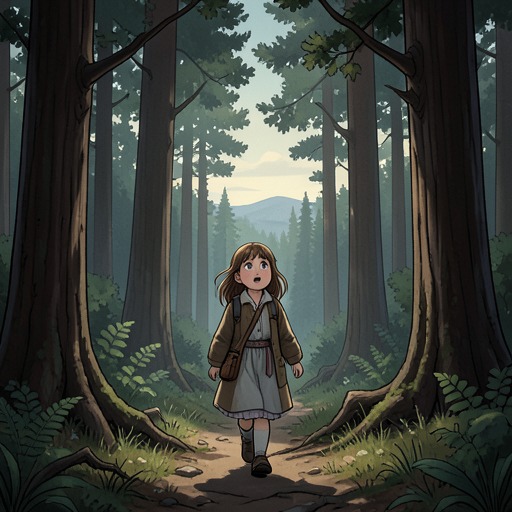
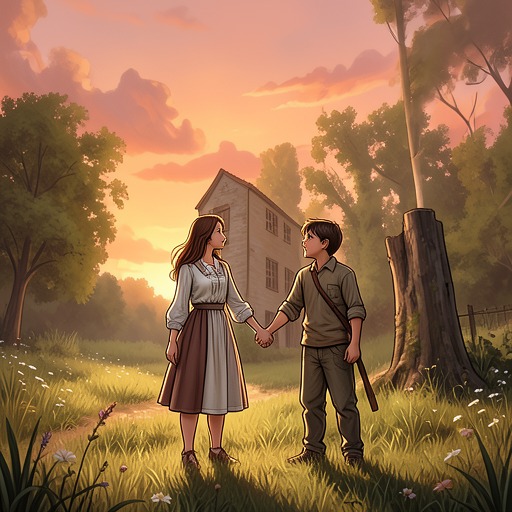
Ronia has missed her woods, but Matt keeps her at home until the snow melts and he is ready to ride out with his robbers. Once he lets her go, she heads back toward the forest and the meeting with Birk. He is waiting on a flat rock in the sunshine. Ronia tosses a stone into the water to find out whether he is awake; when he springs up and comes to her, he tells her he has been waiting a long time. His welcome makes the landscape’s renewal personal: she has returned not only to the woods but to a brother who wants her there.
Ronia greets the season with her whole body and voice, diving headfirst into spring and screeching like a bird because she says she has to give the season a scream or burst. Birk listens with her. Around them, the trees, watercourses, and green thickets are full of twittering, rushing, buzzing, singing, and murmuring. The scene makes spring something heard and inhabited, an answering chorus rather than a date on a calendar.
Freedom and the Work of Living
The spring reunion becomes part of a larger experience of independence. Later, in Bear’s Cave, after they have eaten, Ronia and Birk laugh at the prospect of a hard life sustained by spring water. They are warm and well-fed that morning, and feel free as birds; Ronia calls the cave and its surroundings their kingdom, a place no one can take from them or drive them out of. The contrast with winter’s hunger gives their sense of freedom its force: it is bound to shelter, food, and the ability to live without being sent away.
Their self-reliance remains practical. They fetch water from a forest spring, set a net in the river for fish, build a hearth from flat stones, and search for juniper wood for Ronia’s bow. She cuts the bow and two arrows, using a length of her leather rope for a bowstring, and practices until both arrows are lost. Spring’s woodland abundance does not remove effort or danger; it gives them materials and possibilities with which to meet both.
From Spring into Summer
The thaw’s promise carries into summer. Rain passes over the forest for days and nights, leaving it fresh and green; when the sun returns, the woods steam in the heat and fill with a sweet scent that even Birk believes no other forest can match. The children’s life depends on this seasonal ecology. Lia’s wound heals, and she returns to the wild horses, though she still comes near the cave in the evenings to be milked. When she begins carrying a new foal and no longer gives milk, Ronia and Birk face the loss of that food as well as the end of their supply of flour. They expect to manage through fish, forest birds, edible herbs and leaves, and ripening berries, but Ronia admits that the first day without bread or milk will not be pleasant.
Summer also becomes a resource they try to preserve in memory. Birk reminds Ronia that it is summer, and she says she will carry it in her memory for as long as she lives. They know the season cannot last, but choose to live as if it might: making the most of each hour and gathering what Ronia calls a big lump of summer to live on when summer is gone. Their delight is therefore shadowed by knowledge. Spring has restored their freedom, but the passage of the seasons sets a limit on the refuge it makes possible.
The Coming of Autumn
That limit becomes audible and visible in the forest. Ronia recalls Noddle-Pete’s warning that when the Unearthly Ones come up into the woods with their laments, autumn has arrived and winter will soon follow. The children do not want to admit that summer has died slowly, but the change persists. Autumn rain sets in, leaving them for days inside the cave listening to water splash on the platform. The weather is so wet that they cannot keep a fire going; when they go out to run themselves warm, they return soaked and sit wrapped in furs, watching for even the slightest brightening of the sky.
Spring thus begins a cycle whose beauty cannot be separated from its consequences. The snowmelt restores passage and life; summer offers warmth, food, and a chosen home; autumn turns that abundance into memory and makes winter’s return unavoidable. The children’s effort to hold onto summer gives the season emotional weight, but does not stop time. Spring matters both as the end of deprivation and as the beginning of the season they will later struggle to relinquish.